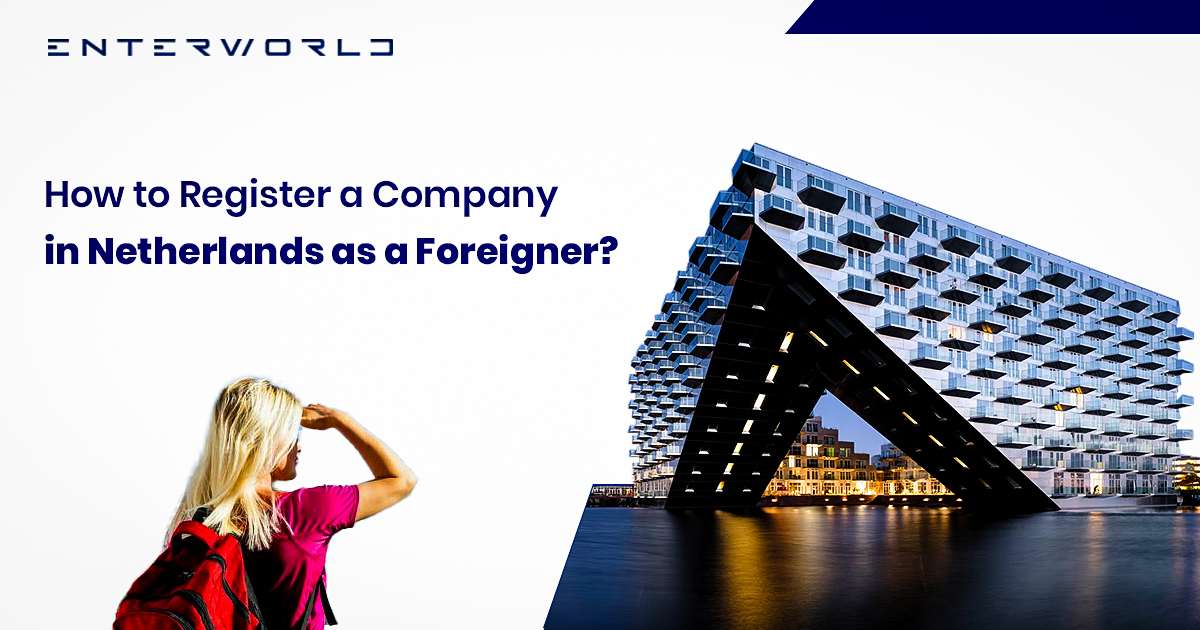
The Netherlands is one of the top choices for foreigners to start a company because of its innovative and pro-business environment. The country welcomes global entrepreneurs from various industries to leverage the advantages of a stable economy and international relations. Located in Northwestern Europe, the Netherlands is famous for its highly developed market economy, strong infrastructure and international trade links.
The Netherlands is a highly innovative country that offers extensive opportunities for foreign entrepreneurs with ease of doing business. According to the Dutch Chamber of Commerce, there are millions of companies registered in the Netherlands, including many foreign-owned companies. Whether you want to start a new company or expand your business, the country offers a simplified company registration process.
This blog will help you understand how to register a company in the Netherlands as a foreigner and enjoy the benefits the country offers its international entrepreneurs.
Why Netherlands?
Did you know that the Netherlands has been ranked in the top five among the best business countries in the world by Forbes and the World Economic Forum in the past? Even today, the Netherlands remain a strong country for foreign businesses, ranking 8th in the global World Intellectual Property Organisation’s (WIPO) Global Innovation Index (GII) and the 3rd most innovative country in the EU.
In the European Innovation Scoreboard 2025, the Netherlands has been ranked no 3rd due to the country’s innovation-friendly policies, investment, R&D opportunities and higher education. Therefore, registering a company in the Netherlands as a foreigner will give you a foundation to kickstart your business and grow your company in an excellent, business-friendly destination with access to various incentives.
Read more – 5 Strategies for Successful International Business Expansion in 2025
Structures for Company Registration in Netherlands
The Netherlands offer various structures for company incorporation customised for your business type. Choosing the right structure is important so that you can leverage the advantages each structure offers. Therefore, foreign entrepreneurs can enter the Netherlands market through different structures for company registration in Netherlands mentioned below:
| Company Structure | Description |
| Sole Proprietorship (Eenmanszaak) | This structure is for individual owners, offers simple and low cost set up. However, involves unlimited personal liability. |
| General Partnership (VOF – Vennootschap Onder Firma) | This structure is for two or more partners with shared management, joint responsibilities and liability. |
| Limited Partnership (CV – Commanditaire Vennootschap) | This structure combines the general and limited partners for business. Mostly for joint ventures. |
| Private Limited Company (BV – Besloten Vennootschap) | The most preferred structure for foreign companies, offers limited liability and flexible shareholding. |
| Public Limited Company (NV – Naamloze Vennootschap) | This structure is designed for multi-national corporations, can conduct fundraising and require a minimum share capital €45,000. |
| Branch Office | This structure is for expanding business activities to the Netherlands as a foreign company, extension of a foreign company but not a separate legal entity. |
How to Register a Company in Netherlands as a Foreigner?
To register a company in Netherlands as a foreigner, you need to follow the following steps listed below:
- Obtain a Residence and a Work Permit: As a non-EEA citizen looking to register a company in the Netherlands, you will first have to apply for a residence or a startup work permit. To legally register a company in the country, you require a legal presence for business within the Netherlands. Therefore, these permits will give you the legal right to establish a company in the Netherlands.
- Dutch Business Address: To register a company or a branch office as a foreign national with the Chamber of Commerce (KVK), you will need a local physical business address in the Netherlands. You will have to provide proof of a physical Dutch address to comply with Dutch legal requirements.
- Select a Business Structure: The Netherlands offer various company structures for company registration. These structures are designed to offer customised benefits to accommodate different business types. Therefore, choose the right business structure for your company incorporation.
- Choose a Company Name: The next step is to choose a company name and verify that the name selected is available for registration through the Dutch Business Register (KvK). The name chosen must be unique and must not be similar to the company names already registered in the Netherlands.
- Draft the Articles of Association: To register your company as a foreign entrepreneur in the Netherlands, you will need to prepare mandatory documents to support your application for company registration. You will also need to draft the Articles of Association (AoA) and Memorandum of Association (MoA).
- Deposit the Share Capital: If you have chosen either the Private Limited Company (BV – Besloten Vennootschap) or Public Limited Company (NV – Naamloze Vennootschap), you will need to deposit the required share capital, such as EUR 1 and EUR 45,000, respectively.
- Sign the Incorporation Deed: To legally register a company in the Netherlands as a foreign entrepreneur, you will need to sign the incorporation deed in front of the Dutch civil law notary.
- Register with the Dutch Kamer Van Koophandel (KVK): The next step is to register your company with the Dutch Kamer Van Koophandel (KVK), which is the Netherlands Chamber of Commerce, to receive a KvK number. As a foreign entrepreneur, you can also register your company remotely through a representative.
- Receive the Dutch Tax Identification Number (BTW & RSIN): After company registration with the Dutch Kamer Van Koophandel (KVK), you will receive your RSIN (Legal Entities Identification Number) and the Added Tax (BTW) Number. Then register with the Dutch Tax Administration (Belastingdienst).
- Open a Corporate Bank Account: After your company is registered with the Netherlands Chamber of Commerce, you will need to open a corporate bank account to facilitate smooth financial transactions within the Dutch economy. Our expert team in Enterworld can help you choose the right bank for business.
- Register with Social Security: If you wish to hire employees for your company in the Netherlands, you must register for Social Security Contributions by registering your company as an employer with the Dutch Tax and Customs Administration (Belastingdienst).
Read more – How to Start a Scrap Business in Dubai?
Benefits of Starting a Company in Netherlands as a Foreigner
The Netherlands is an excellent destination for foreign entrepreneurs and investors, as the country offers various benefits for businesses. From digitally advanced infrastructure to offering strong intellectual property protections and incentives to attract foreign direct investment. The key benefits of starting a company in Netherlands as a foreigner include:
- The Netherlands is an innovative leader offering a powerful digital infrastructure for innovative and tech companies.
- The Netherlands is known as one of Europe’s largest start-up ecosystems with a focus on innovation and entrepreneurship.
- The Netherlands has a strategic location in Europe that offers world-class logistics hubs, facilitating transport and trade for international markets.
- As a foreign entrepreneur, you can register your company remotely; this flexibility makes the Netherlands a preferred destination for global businesses.
- The Netherlands offers a highly favourable tax environment for all businesses with excellent tax incentives.
- The Netherlands has one of the most comprehensive double tax treaties in the world, such as bilateral double tax agreements (DTAs) with over 90 countries.
Documents for Company in Netherlands as a Foreigner
The documents required for company registration in Netherlands as a foreigner are:
- Passport copies (shareholders & directors)
- Articles of Association (AoA)
- Deed of Incorporation
- UBO Declaration
- Identity proof
- Address proof
- Copy of national identity card
- Memorandum of Association (MoA)
- Board Resolution
Timeframe to Set Up a Company in Netherlands
The expected timeline to set up a company in the Netherlands is:
| Estimated Duration | Step |
| 2–4 business days | Prepare and notarize incorporation documents |
| 2–5 business days | Deposit share capital and receive the bank confirmation |
| 1–3 business days | Register with Chamber of Commerce (KvK) |
| 3–7 business days | Apply and receive the tax number and VAT registration |
| 7–15 business days | Complete time to register |
Corporate Taxation in Netherlands
The corporate income tax in the Netherlands is 25.8%. However, the Netherlands have two taxable income brackets. If your annual income is less than EUR 200,000, you will be eligible for a lower tax of 19% and if your annual income is above EUR 200,000, your corporate tax will be 25.8%.
Final Words
The Netherlands offers numerous benefits to foreign entrepreneurs looking to start a company in the country. As a foreign entrepreneur, you can register online without having to travel to the country, which is the greatest advantage. With its strong economy, strategic location and highly favourable tax environment, the Netherlands is an attractive choice for both regional and international entrepreneurs.
At Enterworld, we ensure that your company registration in Netherlands is completed on time without any delays. With 10+ years of experience, our expert team will guide you from documentation to filing and registering your company with the Netherlands Chamber of Commerce.
Contact us today to speak with our experts or visit our website to learn more: visit https://enterworld.io/.
Frequently Asked Questions About Register a Company in Netherlands
Yes, foreign entrepreneurs can work in the Netherlands; however, you will need a work permit or visa. All the non-EU/EEA/Swiss nationals will need to get a work permit, residence permit or be sponsored by the employer to work in the Netherlands.
Yes, non-EU citizens except the EEA and Switzerland citizens will need a residence permit, including a work permit, to start a company in the Netherlands.
Yes, as a foreign entrepreneur you can access the incentives for your company from the Dutch authorities. You can enjoy incentives such as startup visa for non-EU entrepreneurs with innovative ideas, tax incentives like innovation box for R&D profits, highly skilled expats will enjoy 30% of the salary to be tax free, funding for both public and private through grants and subsidies.
The taxes you have to pay as a foreign company in Netherlands are Corporate Income Tax (CIT) of 25.8%. However, if your company has an annual income of EUR 200,000, the corporate income tax will be 19%. As a foreign company, you will have to pay standard withholding tax on dividends of 15%, which can be reduced under the tax treaties
The cost of starting a company in the Netherlands will depend on various factors such as type of the company, structure of the company such as the number of shareholders and type of company formation deed etc. To form a company the approximate cost can be between €1,000 to €1,500 and the cost of company registration in Netherlands is approximately €130 to €200, which will include the registration fee of around €82.25 and a notary fee of €50 to €120.
The advantages of starting a company in the Netherlands are:
– Netherlands have a strategic location for businesses.
– Access to the broader international market.
– A competitive corporate tax rate for registered companies.
– Supportive business friendly environment for foreign companies.
– Numerous tax treaties to prevent double taxation for foreign companies.
Netherlands offers a 30% tax reimbursement ruling for high-skilled migrants and specific expat employees in the country. This tax advantage reduces the taxable amount of the total Dutch income from 100% to 70%. Therefore, foreigners in the country can enjoy 30% tax exemption.
If your documents submitted are accurate and complete, your company can be registered within 7 to 15 business days.
Yes, foreign entrepreneurs can enjoy 100% ownership in the Netherlands.
Yes, as a foreign entrepreneur in Netherlands, you may need additional licenses depending on your business type, if your business deals with food, you may need a food safety license. If your business is in the financial services sector, you will need to obtain a financial services license from the Netherlands Authority for the Financial Markets.
Read more – Top 10 Profitable Business Opportunities in the Middle East

Florida LLC for Amazon FBA: Ultimate 2026 Guide...
Mar 16, 2026
How to Register a Company in Dubai Silicon Oasis...
Mar 10, 2026

How to Start Logistics Business in Oman in 2026?...
Mar 03, 2026
How to Start an Interior Design Company in Dubai...
Feb 25, 2026
The Top 8 Benefits of Incorporating a Company in...
Feb 02, 2026
Startup Tax Exemption Singapore 2026: A Complete...
Jan 28, 2026
Australia Corporate Tax & Incentives: Update...
Jan 22, 2026
How to Set Up a Company in the United States: 20...
Jan 22, 2026

Annual Compliance Calendar in Australia 2026: Al...
Jan 21, 2026

Foreign Ownership Rules in the United States: Wh...
Jan 20, 2026