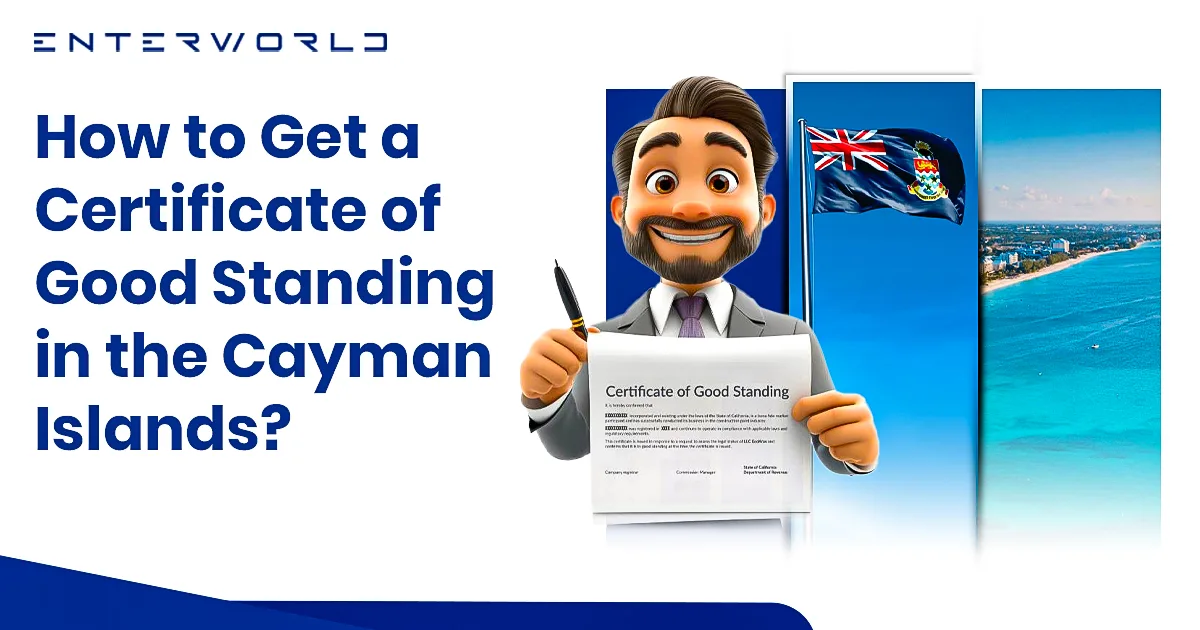
The Cayman certificate of good standing, which is a legal document, is issued by the Registrar of Companies. The document provides a legal status to the company and confirms the company’s compliance with the local laws and regulations.
A certificate of good standing is an important document for businesses involved in international transactions. It also offers proof of the company’s legal standing for banking and regulatory processes. Owning a certificate of good standing in the Cayman Islands will give businesses greater credibility for due diligence during audits and cross-border transactions.
This blog explains the significance of a certificate of good standing in the Cayman Islands and outlines the step-wise process involved in obtaining the legal document.
What is a Certificate of Good Standing in the Cayman Islands?
The certificate is a formal document ensuring that the company is legally registered with the Companies Registry. It also confirms that the company is completely compliant with the local corporate obligations.
The certificate is issued by the Cayman Islands Registrar of Companies (under the General Registry, Ministry of Financial Services). The registry’s authentication system also includes online validation and authorisation codes, offering additional credibility. The certificate ensures a good standing and legally authorises companies to conduct business operations under the Cayman law.
Depending on the portal or a service provider, the certificate may also be known as a certificate of existence, certificate of status or a corporate certificate of good standing; however, it offers the same legal weight in compliance.
What is Included in the Certificate of Good Standing in Cayman Islands?
Have a look at the inclusions of certificate of good standing in Cayman Islands-
- Legal company name
- Date of incorporation
- Official registration number
- Current legal status in good standing
- Confirmation of fees and annual filings being up to date
- A unique authorisation code or stamp validating its authenticity
How is the Certificate of Good Standing Different from Other Corporate Documents in Cayman?
The Cayman Islands certificate of good standing is different compared to other corporate documents. Having a certificate of company incorporation in the Cayman Islands only confirms that you have successfully registered your company, but does not confirm your company’s legal status or your company’s current compliance. Similarly, having a tax clearance certificate only verifies your tax compliance, which is not issued in the Cayman Islands, as it is a tax-neutral country.
On the other hand, a certificate of good standing provides an up-to-date confirmation that a company is registered and is in compliance with the statutory obligations, including renewal fees and annual filings. This certificate is an internationally recognised document to demonstrate a company’s operational and legal status.
Who Needs a Certificate of Good Standing in the Cayman Islands?
All the companies and legal entities are required to obtain a certificate of good standing in the Cayman Islands. This certificate will verify the company’s compliance and operational credibility under the Cayman law. Below is a list of common scenarios when a certificate of good standing is needed in the Cayman Islands:
- Exempted Companies in Cayman Islands: Commonly used for international businesses, especially in asset financing and SPV structures. These companies are often required to show ongoing compliance for financing, licensing, or listing purposes.
- Special Purpose Vehicles (SPVs): The SPVs, including the segregated portfolio companies, when set up for securitizations or structured finance transactions. Additionally, lenders, trustees, and investors usually ask for proof that the entity is legally active and compliant.
- Companies Engaged in Cross-Border Transactions: Legal entities involved in cross-border transactions, such as holding companies, joint ventures, financing arrangements, or international trade structures. A certificate of good standing helps confirm the company’s legal status and compliance with banks, law firms and regulators.
- Hedge Funds and Investment Companies: The hedge funds and investment companies that operate through exempted companies or SPCs in the Cayman Islands. Fund managers, administrators, custodians, and regulators often request the certificate during licensing reviews or due diligence.
It is advised to note that the unregistered partnership and sole proprietorships are not eligible to apply for a certificate of good standing. The eligible legal companies that are allowed to apply for the certificate are only the registered legal entities, like Cayman Island LLCs or exempted companies.
Read More : How to Register a Company in Solomon Islands as a Foreigner?
When is a Certificate of Good Standing in the Cayman Islands Required?
It is recommended for companies in the Cayman Islands to understand when a certificate of good standing is required. It is particularly important for legal entities involved in regulated or international businesses.
The common reasons for obtaining a certificate of good standing are as follows:
- The most common reason the certificate is required is when opening an international bank account. Most of the global banks require legal entities to provide a valid statement of good standing.
- Companies that appoint auditors will need to submit a certificate of good standing to confirm legal compliance and ensure that the company is in good standing.
- If you are registering a branch or a subsidiary in another country, foreign regulatory authorities often ask for a certificate of good standing of the Cayman parent company.
- During company acquisitions, mergers, or corporate restructuring, the buyers and legal advisors will need the certificate to verify that the company is legally valid.
- The certificate will also be needed when the company is applying for renewal of the business and trade license, particularly for current legal verification by local authorities.
- Companies with higher thresholds and international implications looking to participate in government contracts will need the certificate to support their eligibility criteria.
How to Obtain a Certificate of Good Standing in the Cayman Islands?
Obtaining a certificate of good standing in the Cayman Islands is a step-wise procedure which involves a straightforward administrative process. Here is the step-by-step process required to follow:
- File a Request with the Registrar of Companies
The first step is to file a request with the registrar of companies through a registered agent who will apply through the e‑Gov corporate administration portal or the Cayman Business Portal (CBP).
- Ensure Company Records are Up-to-Date
The legal entity must ensure that the company records are up-to-date and current. The company’s annual returns must be filed on time, government fees must be paid, and Cayman economic substance filings and beneficial ownership must be submitted.
- Use a Registered Agent or Official Portal
If you are a foreign entrepreneur, you will have to apply for a certificate of good standing through a registered agent. However, if you are a resident, you can apply directly through the official online portal.
- Obtain a Certificate of Good Standing
If the above compliances are met and the application does not have any discrepancies, you will obtain a certificate of good standing within 1 to 3 working days. However, in special and complex cases, the time required may be longer.
Requirements to Qualify for the Certificate of Good Standing in Cayman Islands
All the incorporated companies in the Cayman Islands do not automatically qualify for a Cayman certificate of good standing. The certificate will not be issued without proper compliance. To be eligible, the company must meet all the specific local compliance requirements, which include:
- No overdue annual returns or outstanding government fees payments.
- No ongoing regulatory or legal issues that could affect the company’s standing.
- A legally registered office and licensed registered agent on record.
If the annual compliance requirements are not met, the company may lose its good standing. To maintain a company’s good standing, you will have to ensure that your company does not miss the filing dates, neglect fee payments, maintain a registered office space, or the company is not subject to legal or regulatory enforcement.
If any of the above conditions are not met, the company will not find the certificate option in the CBP portal, as it will not appear. When this happens, the company’s authorized personnel or registered agent will have to resolve the compliance issues with the registry before applying again.
Consequences of Not Having a Certificate of Good Standing in Cayman Islands
If your company in the Cayman Islands does not have a certificate of good standing, the stakeholders could misinterpret it as a sign of non-compliance. This can cause reputational damage and legal complications.
If you are applying for a business license or banking services, without the certificate, it may be denied. Additionally, your company may be flagged as inactive or non-compliant by the Cayman Islands Registrar of Companies.
Without a certificate of good standing, there will be potential delays in major transactions, and your company may even be prevented from proceeding with global agreements. Your company will face operational blocks and may receive halts on corporate activities.
Cost of Obtaining a Certificate of Good Standing in Cayman Islands
The fees and actual cost of obtaining the Cayman Islands certificate of good standing will vary based on the mode of application and additional service requirements. Depending on the current cost structure, effective January 1, 2025, from the Cayman Islands General Registry, the standard cost of application for the certificate is around CI$150. This amount includes the government’s processing charge, regardless of using a registered agent or applying directly through the online portal.
Fees are subject to change and may differ based on the price markup and charges of the service provider. However, the Cayman Islands’ current base government fees for a certificate of good standing will remain around US $125–150.
The additional cost may be included, which are:
- Delivery through express or courier services of physical documents.
- Certified or notarised copies of the official certificate.
- Third-party handling charges or convenience charges from the registered agent or service providers.
How to Verify a Cayman Islands Certificate of Good Standing?
Verifying a certificate of good standing in the Cayman Islands will ensure that the certificate is authentic and provide protection from fraud. Below are the three ways through which you can verify the certificate:
- Reviewing the Document Serial Numbers and Official Seals
The original certificate of good standing will have a date of issuance, a unique entity file number, the official Registry seal, and a secure authorisation code. You can compare these details from the government portal.
- Checking Using the Government’s Verification Portal
You can use the company’s authorisation code and file number featured on the certificate and verify its authenticity and validity. Visit the official government verification portal and follow the instructions on-screen.
- Using the Services of a Registered Corporate Service Provider
You can use the services of a registered agent or corporate service providers in the Cayman Islands to verify the certificate, as they have access to the General Registry system, making it hassle-free.
Benefits of Having a Certificate of Good Standing in the Cayman Islands
The list of benefits for having a certificate of good standing in the Cayman Islands includes:
- Strengthens business credibility with investors and clients worldwide.
- Simplifies international transactions by facilitating smooth banking and investment operations.
- Certificate proves your company’s compliance with the country’s rules and regulations.
- Streamlines business operations without potential delays and supports asset protection.
- Helps attract global capital and investment by ensuring strong corporate governance.
Why Choose Enterworld?
Enterworld is the trusted partner for obtaining your certificate of good standing in the Cayman Islands. Our team provides a streamlined process to make sure the certificate reaches you on time without potential delays. We will ensure that your company is in 100% compliance with all the requirements and is properly registered with the State before applying for the certificate.
In Summary
As an established company in the Cayman Islands, obtaining a certificate of good standing is important to ensure your company’s compliance with the regulations. It is essential for companies like SPVs, exempted companies, funds, and firms that manage international transactions.
Obtaining a certificate of good standing will help your company during the opening of a corporate bank account, renewal of license, company audits and mergers. As the banks, law firms, etc., will conduct verification during due diligence or compliance reviews.
Additionally, it is important for companies to conduct routine monitoring of their standing. It is equally important to only take help from licensed third parties to avoid fraudulent documents without a valid authorisation code or official seals.
Learn More : New Zealand’s Digital Business Ecosystem: A Gateway for Global Entrepreneurs
Maintaining up-to-date compliance documentation will help you retain your certificate, ensure long-term credibility and support uninterrupted business activity in the global markets, preserving your company’s good standing. At Enterworld, we help in securing a certificate of good standing in Cayman Islands.
Frequently Asked Questions about Cayman Islands
In the Cayman Islands, a certificate of good standing is a document. This legal document is issued by the Registrar of Companies to confirm a company’s legal status and compliance with the local laws of the Cayman Islands.
The exact cost for a certificate of good standing in the Cayman Islands will vary based on the service provider or the registered agent’s charges. However, the government fee effective 1st January 2025 is approximately CI$150, which converts to around US$125–150. The fees are subject to change, and it is advised to confirm with the registry before applying.
The information that is included in the Cayman certificate of good standing is the registered company name, registration number, company type, company’s legal status, compliance confirmation that the company remains registered at the Cayman Islands Government General Registry, company’s good standing, authorisation code to validate certificate, registry stamped and the signature of an authorised officer.
The Cayman Islands certificate of good standing certifies that a company complies with all the local regulations. It also means that the payments and filings are up-to-date, and the company is legally allowed to conduct business operations.
To verify your certificate of good standing with the registry, use the authorisation code or file number provided on the certificate. Visit the official verification online portal, which is www.verify.ky or the General Registry site, and enter the authorisation code and click validate. This process will verify the certificate in real-time.
A certificate of good standing is a document that confirms a company’s compliance with regulatory and legal requirements, verifying that the company is active and has a legal existence. While a certificate of incumbency provides information on the company’s structure, details of the registered office address, directors and shareholders.
Below are the key reasons why Enterworld is your top business partner for obtaining a certificate of good standing in the Cayman Islands:
Fast turnaround through our streamlined process.
Meet all compliance requirements before applying.
Documents are delivered securely through trusted channels.
Handle the process online, offering a hassle-free procedure.
No, a certificate of good standing cannot be obtained by a struck-off or dissolved company. This certificate is only issued to companies that have a good legal and regulatory standing with the Cayman Islands registry.
There is no expiry date for a certificate of good standing in the Cayman Islands. However, it solely depends on the compliance requirements of the requested authority to determine the eligibility for acceptance.
Companies with pending compliance issues cannot request a certificate of good standing in Cayman Islands. It is a mandate by the Cayman Islands registry for companies to resolve all outstanding compliance requirements before applying for the certificate.
The authority that has the power to certify a certificate of good standing and confirm your company’s legal status in the Cayman Islands is the Companies Registry. It is a part of the Cayman Islands General Registry.
Florida LLC for Amazon FBA: Ultimate 2026 Guide...
Mar 16, 2026

How to Register a Company in Dubai Silicon Oasis...
Mar 10, 2026

How to Start Logistics Business in Oman in 2026?...
Mar 03, 2026

How to Start an Interior Design Company in Dubai...
Feb 25, 2026
The Top 8 Benefits of Incorporating a Company in...
Feb 02, 2026
Startup Tax Exemption Singapore 2026: A Complete...
Jan 28, 2026
Australia Corporate Tax & Incentives: Update...
Jan 22, 2026

How to Set Up a Company in the United States: 20...
Jan 22, 2026

Annual Compliance Calendar in Australia 2026: Al...
Jan 21, 2026

Foreign Ownership Rules in the United States: Wh...
Jan 20, 2026