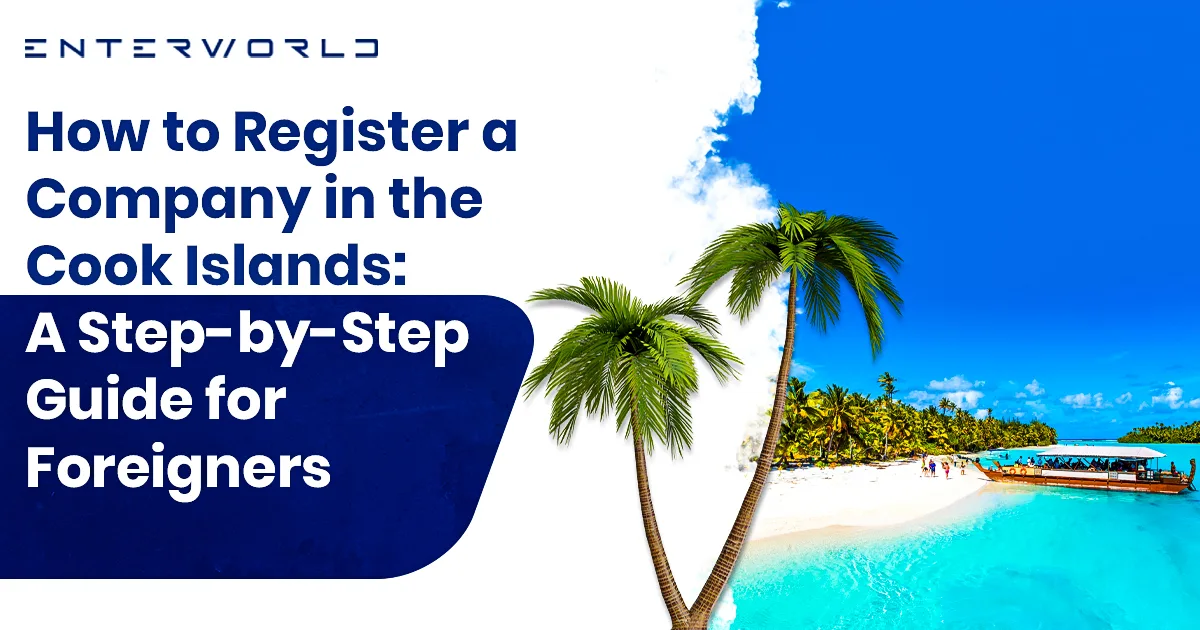
In this modern-day global economy, it is increasingly evident that entrepreneurs and corporations look for jurisdictions that can meet their expectations in terms of efficiency, stability, and international credibility. Today, the Cook Islands rank as one of the most preferred choices when it comes to international company registration, given the country’s powerful asset protection legislation, political stability, and a transparent regulatory regime. These privileges make it an ideal destination for investors, various consultants, holding companies, and firms that specialise in asset management services.
The Cook Islands company registration process is streamlined and supported by experienced Cook Islands corporate services, ensuring ease of compliance and administrative efficiency. Whether you are considering the formation of a company in the Cook Islands for offshore structuring or looking into a broader Cook Islands business setup, this jurisdiction will provide flexibility and recognition of cross-border ventures.
To get to know more about the company registration process in the Cook Islands, follow the step-by-step guidance outlined in this blog. For personalised support, connect with Enterworld for skilled guidance from planning through incorporation and beyond.
Why Choose the Cook Islands for Company Registration?
Before entering into the detailed, step-by-step process, it is necessary to understand why the Cook Islands have turned into a favourite jurisdiction for international entrepreneurs.
The region combines legal strength, global credibility, and financial efficiency, making it an attractive destination for company registration in Cook Islands . Taking into account the offshore advantages of the Cook Islands, coupled with a sound environment for safety, investors, consultants and corporate groups prefer to find company formation in the Cook Islands.
The smooth process of company incorporation in the Cook Islands is particularly popular for international business companies (IBCs) and structures related to asset protection and global operations.
Key benefits of Cook Islands company incorporation:
- For shareholders and directors, there is a high level of confidentiality
- Stability in the economic and political environment.
- Strong asset protection laws
- No inheritance tax, capital gains tax or wealth tax
- International compliance and credibility
- English standard law legal system
Types of Companies You Can Register in the Cook Islands
Selecting the appropriate form of company is imperative to avoid issues associated with compliance and tax optimisation, as well as ensuring success. Various structures are offered in the Cook Islands to cater to the interests of entrepreneurs, business groups and investors who wish to gain recognition and safety in their offshore destination. Below are the types of companies you can register in the Cook Islands:
1. International Business Company (IBC)
The most typical form for non-resident businesspeople suited for:
- Consultation service
- Holding companies
- International trade
- Asset protection
2. Limited Liability Company (LLC)
Offers limited liability protection and flexibility, which is ideal for small to medium-sized enterprises as well as joint ventures.
3. Trusts and Foundations
Commonly used in wealth management, trust or estate planning, and family assets protection under the strong legal system in the Cook Islands.
4. Domestic Companies
It has been designed for the Cook Islands business environment, ensuring compliance with the necessary Cook Islands laws and legislation.
Based on your objectives, Enterworld can help determine which structure is appropriate.
Learn More : How to Register a Company in Iceland as a Non-resident?
Who Should Register in the Cook Islands?
The Cook Islands offer a favourable environment for entrepreneurs and organisations looking for the benefits of an offshore location. The legal system of the Cook Islands provides flexibility in company structures, the tax system is beneficial, and the compliance environment is conducive. By linking a company’s nature to its business aims, the Cook Islands provide a stable foundation for international expansion.
Ideal Candidates Include:
- International entrepreneurs: Individuals seeking to venture internationally while achieving an efficient offshore incorporation.
- Asset Protection Seekers: People and families looking to protect their assets using trusts and foundations.
- Fintech Startups: Organisations using cutting-edge banking and EMI services for international transactions.
- Holding Companies: Companies that oversee global investments/subsidiaries with a safe legal structure.
- NGOs and estate planners: NGOs and estate planners utilising Cook Islands structures for governance and estate succession planning
What are the Legal Requirements for Registering a Company in the Cook Islands?
Entrepreneurs are obliged to meet certain compliance thresholds that guarantee transparency and internationally dependable companies when registering a company in the Cook Islands.
The jurisdiction is AML and KYC compliant on the global level, and there is no minimum paid-up capital requirement, so it’s easy to enter and operate for startups and SMEs.
Some of the key legal requirements include:
- At least one main shareholder : May be an individual or corporate entity to ensure ownership and control of the company.
- At least one director : This can be the same as the shareholder. It’s required to give the management and supervisory roles of the company.
- Registered office address in the Cook Islands : Establishes a local presence for receipt of legal correspondence.
- Licensed registered agent (licensed in-state registered agent) : It acts as the company’s liaison with the relevant authorities and ensures compliance with all statutory requirements.
- Memorandum and Articles of Association : These set out the structure of the company, its objects, and the rules under which it will be governed.
- AML and KYC compliance : Assures transparency and conformity with international standards.
Step-by-Step Process: How to Register a Company in the Cook Islands
Incorporating a business in the Cook Islands is an easy and hassle-free process facilitated by experts in corporate services, with an easy-to-follow set of rules and regulations. To incorporate a business in the Cook Islands, one needs to follow the following steps:
Step 1: Choosing a company name
The new name suggested has to be unique and is to be approved by the Cook Islands Registrar of Companies.
Step 2: Choose a business structure for your company
Decide whether it will be an IBC, an LLC, or another type of entity, depending on the type of business being conducted.
Step 3: Appoint directors and shareholders
It is necessary to provide identity and address verification documents. These documents must be available to regulatory authorities upon request.
Step 4: Prepare legal documents
Contains Memorandum of Association (MOA), Articles of Association (AOA), and shareholders’/directors’ register.
Step 5: Submit KYC and due diligence documents
For AML purposes, copies of passports, proof of address, and business types are regulated as part of the compliance process.
Step 6: Registering the company
The registered agent for the license submits all papers to the registrar.
Step 7: Receive certificate of incorporation
After the approval, your business entity comes into existence under the law.
Read More : How to Register a Company in Solomon Islands as a Foreigner?
Know the Timeline for Registering a Company in the Cook Islands?
This process usually requires only 5-10 business days, ensuring that the Cook Islands have efficient company formations for foreign businesspeople.
Are you looking for hassle-free Cook Islands company formation services? With Enterworld, you get end-to-end assistance for documentation preparation and incorporation.
Cost of Company Registration in the Cook Islands
The total cost of company registration in the Cook Islands depends on the type of company and the services needed. Entrepreneurs are assured of an obvious pricing structure where the cost of company registration includes all professional and government expenses. This makes company registration in the Cook Islands favourable for startups and offshore companies.
Typical Cost Components in the Cook Islands
Given below are the typical cost components in the Cook Islands-
- Fees payable to the Cook Islands registrar of companies : These are government charges payable to the Cook Islands registrar of companies in respect of company incorporation, registration and official filing of corporate records.
- Registered agent fees : Fees associated with hiring licensed, local agents for handling filing and compliance issues.
- Legal documentation : Preparation of Memorandum, Articles of Association, and Statutory Registers.
- Compliance and KYC : Confirmation of the identity of the shareholders and directors of a business.
Approximate Cost
USD 3,000 – 6,000, depending on the company formation and other services
Taxation System in the Cook Islands
One of the most attractive factors of Cook Islands business incorporation could be considered its beneficial tax system, which lures businesspersons and investors from across the globe. It provides substantial exemptions from most taxes, which makes it a very efficient option for offshore incorporation. Although offshore income is exempt from taxes, subject to the structure of the business, businesses are required to abide by global taxes and laws.
Major tax advantages
- There is no tax on capital gains: Any gain earned from the sale of assets is not taxed.
- Inheritance and estate taxes: There are no inheritance or estate taxes.
- There is no wealth tax: Personal and corporate wealth is exempt from annual tax.
- Offshore income: May be exempt from tax (depending on the structure), which enhances offshore tax efficiency.
Compliance and Reporting Requirements
Despite the presence of a favourable business environment in the Cook Islands, firms are expected to comply with certain ongoing obligations in order to be in good standing. Such requirements are to ensure that firms are transparent and meet global requirements. Failure to comply results in penalties and/or strike-off of the company.
Ongoing Requirements
- Annual renewal: Every company is obliged to register annually.
- Registered agent maintenance: Having a registered local agent to receive notices and deliveries.
- Proper accounting records: Financial records need to be appropriately maintained.
- AML compliance: Compliance with Anti-Money Laundering regulations is compulsory.
- Economic substance issues (if applicable): There are some requirements regarding the economic substance for certain types of entities.
How to Open a Bank Account for a Cook Islands Company?
Opening a corporate bank account is a crucial step to set up your Cook Islands company fully. The Cook Islands have several alternatives when it comes to banks, which range from conventional banks to new fintech banks.
Banking Options
- International banks : They offer worldwide reach, multiple currency accounts, and a reputation for conducting cross-border business.
- Offshore banks : These banks provide expert services in areas such as asset protection, confidentiality, and conducting international business.
- Fintech and EMI Solutions : Digital platforms developed to facilitate fast onboarding, online payment options, and innovative financial management.
The banks usually demand:
- Certificate of Incorporation : Certificate of legal company registration.
- Company documents : Memorandum, Articles of Association, and statutory registers.
- KYC documents : Identification and address verification of directors and shareholders.
- Business Plan : Activities, expected transactions, and fulfilment of Anti-Money Laundering (AML) rules.
Enterworld can help you with the bank account introduction and the preparation of documentation.
Risks and Considerations
While the Cook Islands definitely have their own set of advantages when it comes to the formation of an offshore company, careful analysis of possible risks is equally required for any enterprise to ensure its sustainability over a long period of time. This would involve compliance with international standards and proper planning to avoid complications, for which professional advice is paramount.
Key Risks to Consider
- Due diligence requirements of banking: Banks also scrutinise shareholders and directors, apart from the nature of business activities, before allowing the opening of accounts.
- International tax reporting obligation: Every company is obliged to comply with global tax frameworks such as CRS and FATCA, as per their respective jurisdictions.
- Entity substance regulations: In some cases, entities must show substantive business activity in order to comply with international regulations.
- Reputation management: Offshore jurisdictions tend to fall under scrutiny, so being transparent and credible will be important in terms of international partnerships.
Conclusion
Incorporating an offshore company in the Cook Islands is an advantageous endeavour for any entrepreneur and/or organisation in regard to protection and tax optimisation. In association with an efficient and stable legal system, the Cook Islands continues to remain one of the favourite locations to register an offshore company. However, it is essential to point out that the process of incorporating an offshore company in the Cook Islands is a critical exercise and should be carried out carefully and cautiously.
If you plan to register an offshore company in the Cook Islands, Enterworld is there to assist you.
FAQs about Cook Island
Yes, the Cook Islands are in fact an offshore jurisdiction. It has an international reputation, stringent regulation, and compliance with best international practices for transparency and anti-money laundering (AML). The jurisdiction, in fact, provides tough laws, stability, and security for foreign businesspeople and investors alike.
IBCs, LLCs, trusts, foundations, and domestic corporations can be formed according to business requirements.
Yes, foreigners can register a company in the Cook Islands. Foreigners have complete ownership rights, and they can run the company without the necessity of residency. It is quite easy for overseas entrepreneurs to register a Cook Islands company.
Company registration takes typically 5-10 working days, depending on the completeness of documents submitted and regulatory sanctions.
The registration cost for Cook Islands companies varies from USD 3,000 to 6,000. The price depends on the nature of the company and the services required.
Local taxation may be applicable to domestic companies in the Cook Islands. However, offshore businesses like IBCs are usually very tax-efficient and might enjoy exemptions based on the type of structure and business operation involved. This itself is a good reason for global entrepreneurs to use Cook Islands company formation for the purposes of seeking an offshore advantage.
Yes, renewal of annual compliance is required to remain in good standing.
Yes, with documentation and KYC, businesses can obtain offshore and global banking facilities.
Yes, the Cook Islands is a globally recognised centre with the most robust asset protection laws in respect to claims and creditors. The trusts and foundations established herein provide long‑term security for individuals and businesses seeking wealth preservation.
Yes. For Cook Islands companies that are offshore, no physical presence is required. This allows a director and shareholder to be present virtually in managing the operations. That feature makes it suitable for all international entrepreneurs and digital businesses.
Yes, it is. The formation of a company in the Cook Islands is absolutely legal and regulated by the local law. It is based on international standards, which assure the legality and credibility of businesses operating across international borders.
No, the whole incorporation process can be done remotely. That makes Cook Islands company formation relatively easy and accessible for international clients.
Yes, nominee services are allowed, but in compliance with the anti-money laundering rules and know-your-customer regulations.
No, information relating to shareholders and directors is typically kept confidential. This increases privacy.

Florida LLC for Amazon FBA: Ultimate 2026 Guide...
Mar 16, 2026

How to Register a Company in Dubai Silicon Oasis...
Mar 10, 2026

How to Start Logistics Business in Oman in 2026?...
Mar 03, 2026

How to Start an Interior Design Company in Dubai...
Feb 25, 2026
The Top 8 Benefits of Incorporating a Company in...
Feb 02, 2026
Startup Tax Exemption Singapore 2026: A Complete...
Jan 28, 2026
Australia Corporate Tax & Incentives: Update...
Jan 22, 2026
How to Set Up a Company in the United States: 20...
Jan 22, 2026

Annual Compliance Calendar in Australia 2026: Al...
Jan 21, 2026

Foreign Ownership Rules in the United States: Wh...
Jan 20, 2026